
The in-person portion of the meeting will be held at the Academy of Natural Sciences, BEES classroom (3rd floor).
Meeting agenda:
7:15 PM: Zoom opens
7:30-8 PM: Club business
8 PM: Presentation followed by questions (might start earlier if club business finishes earlier).
Please register for the meeting whether you will be attending in person or via Zoom. Then watch for the meeting link in your email. Disregard the meeting link if you will be attending in person.
Community science images and whole genome sequencing of museum specimens reveal the genetics of visual mimicry in toucans.
Speaker: Jon Merwin (in-person)
Morphology, particularly coloration, results from tradeoffs between selective pressures, such as remaining hidden or signaling fitness to potential mates. Understanding how and why specific colors evolve requires uniting the broader macroevolutionary context of phenotypic evolution with the history of loci that underlie phenotypic variation at the landscape scale. My research unites macroevolutionary studies of color with comparative and population genomics to link traits to genes. I am particularly interested in understanding the genomics of visual mimicry, using toucans as a model system to better understand how convergent phenotypic variation evolves. In this talk, I will discuss how I use community science image databases, color measurements of museum specimens, and whole genomes to link causal genes to colors in bird feathers and soft parts, testing how and why visual mimicry evolved in the Ramphastos toucans. I will also share how I collaborate with students in my research and help them to develop a scientific voice to pursue independent questions about evolutionary biology and global change using museum collections.
—
ABOUT THE SPEAKER
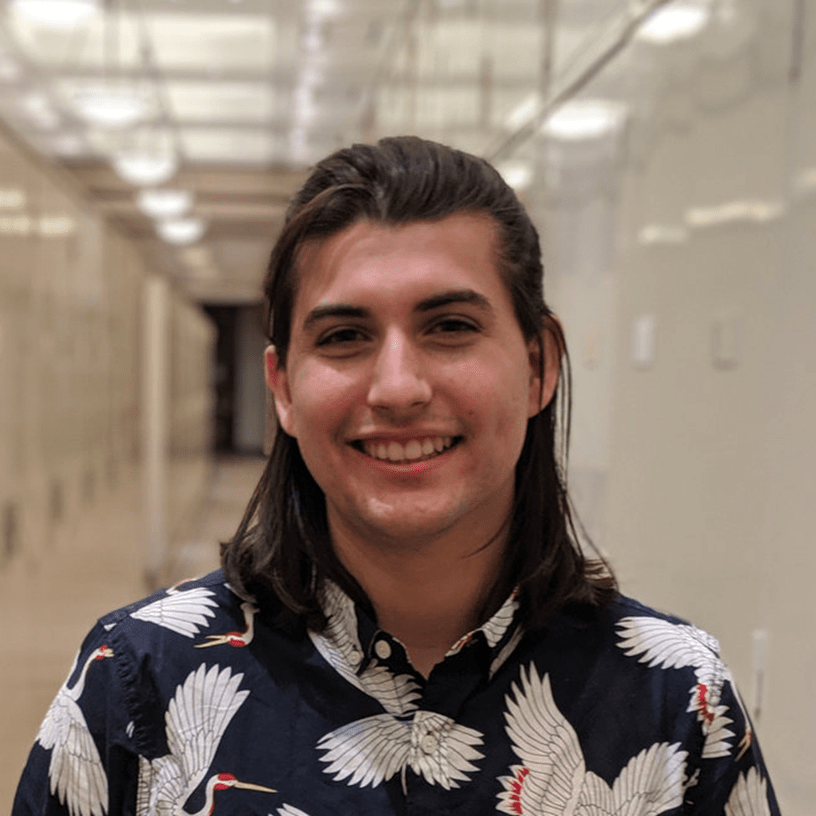 Jon Merwin is a doctoral candidate working with Dr. Jason Weckstein at the Academy of Natural Sciences. After receiving his BA in environmental biology from Columbia University in 2017, Jon worked in the American Museum of Natural History’s Department of Ornithology, where he studied the evolution of colorful plumage in parrots. He is interested in spatial patterns of biodiversity and the evolution of phenotypic complexity. At Drexel, Jon investigates the genomic basis of mimicry in toucans and integrates museum- and field-based research with public outreach and education.