
The in-person portion of the meeting will be held at the Academy of Natural Sciences, BEES classroom (3rd floor).
Meeting agenda:
7:15 PM: Zoom opens
7:30-8 PM: Club business
8 PM: Presentation followed by questions (might start earlier if club business finishes earlier).
Please register for the meeting whether you will be attending in person or via Zoom. Then watch for the meeting link in your email. Disregard the meeting link if you will be attending in person.
The Eastern Songbird Morbidity/Mortality Event of Summer 2021: Summary of Findings
Speaker: Sabrina Greening (in-person)
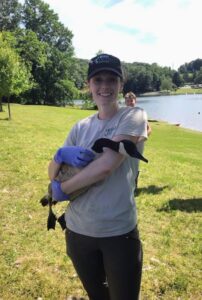 In May 2021, wildlife managers in Washington D.C., Maryland, Virginia, West Virginia, and Kentucky began receiving reports of sick, dying, and dead birds exhibiting neurological behaviors with eye swelling and crusty discharge. The public and licensed wildlife rehabilitators provided initial reports, while additional reports were received in Delaware, New Jersey, Pennsylvania, Ohio, Indiana, Tennessee, and Connecticut. The majority of reports involved fledgling common grackles (Quiscalus quiscula), blue jays (Cyanocitta cristata), European starlings (Sturnus vulgaris), and American robins (Turdus migratorius). Early in the event, the involved jurisdictions indicated a collective desire to work together in a regional response with consistent public messaging and collaboration among diagnostic laboratories working to identify the cause(s) of the event. The U.S. Geological Survey National Wildlife Health Center (NWHC) facilitated conversations regarding event response among the affected jurisdictions and responding diagnostic laboratories. The laboratories examined numerous carcasses, tissues, and forage items via necropsy, histopathology, virology, microbiology, parasitology, and toxicology. In addition to traditional techniques, transmission electron microscopy and metagenomics analyses were performed. Despite the exhaustive collective effort of the laboratories, no definitive cause(s) of illness or death have been determined at this time. However, the labs have collectively been able to rule out important diseases and pathogens, including salmonellosis, chlamydiosis, avian influenza, West Nile virus, coronaviruses, Newcastle disease, herpesviruses, poxviruses, and Trichomonas parasites. In this presentation, we will provide additional background on the event, summarize the main diagnostic findings, and describe lessons learned through the coordinated state agency response and public communications.
—
Sabrina Greening (she/her), Senior Research Investigator, Wildlife Futures Program, University of Pennsylvania. Sabrina is an epidemiologist interested in how different data sources can be integrated to support wildlife health decisions, conservation management strategies, and One Health initiatives. Her current project focuses on the development of the Shared Wildlife Health Information System (SWHIS) – an online database tool designed to facilitate the management, analysis, and sharing of wildlife health data. Prior to this position, Sabrina completed a Ph.D. and postdoctoral fellowship with the EpiCentre at Massey University, New Zealand. Her Ph.D. looked at how pathogen whole genome sequence data could be used to help understand the dynamics between host population contact structures and the epidemiology of infectious diseases within the New Zealand poultry and dairy sectors. With a background in both livestock disease systems and wildlife health, she hopes her work can continue to promote the development of enhanced surveillance systems that recognize the interconnection between people, animals, and their shared environment.
Investigating persistent impacts of West Nile virus on Pennsylvania birds
Speaker: Brock Geary (in-person)
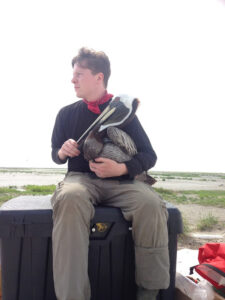 West Nile virus (WNV) drove troubling, publicized declines in many bird populations upon its arrival in the United States, but effects of the virus in the United States have not been broadly assessed in over 15 years. An updated, landscape-scale understanding of WNV’s ongoing impacts is therefore needed to guide effective management and improve future health outcomes for both wildlife and humans. This presentation details research that uses Pennsylvania’s mosquito surveillance database to model the occurrence of WNV over space and time. By linking this information to Breeding Bird Survey records, we assess how local and annual environmental changes relate to trends in abundances of over 150 bird species. Current work to characterize the shared ecology and phylogeny of WNV-impacted species will inform future field-based approaches, with the ultimate goal of improving our capacity to understand how disease shapes wildlife trends relative to habitat loss and other threats.
—